
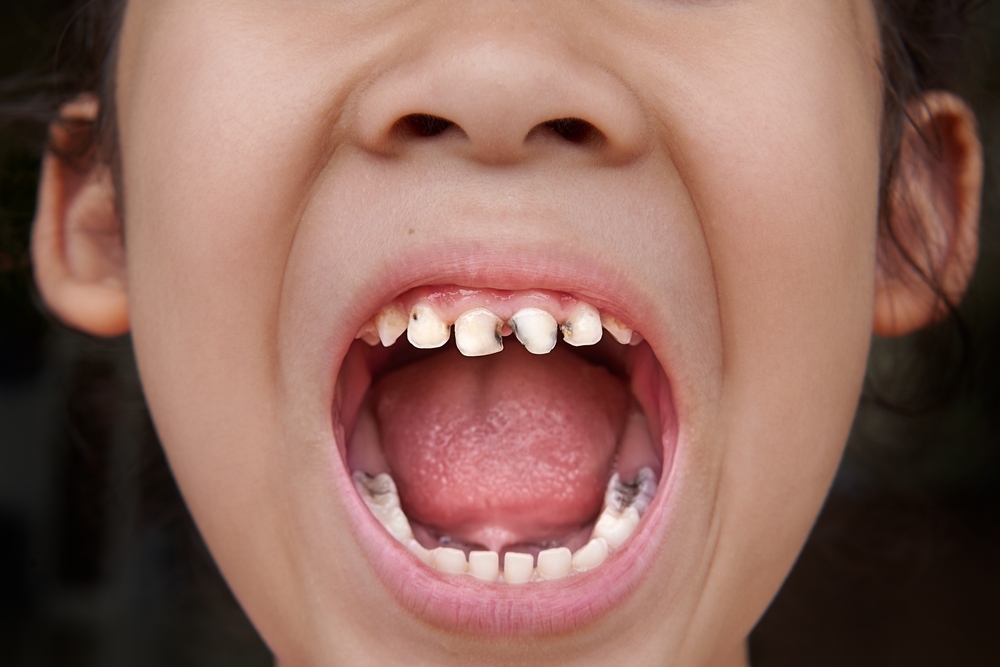
Most parents work incredibly hard to feed their children well. Yet even in health-conscious homes, dentists are seeing more early childhood cavities (caries) than ever before.
That’s because dental caries aren’t just caused by sugar. They’re influenced by sticky foods, snacking frequency, mouth breathing, oral microbiome health, airway issues, tongue function, and even jaw development.
The good news? Once we understand what’s happening in a child’s mouth, preventing decay becomes far more achievable.
Below, you’ll learn the key causes, simple prevention steps, and when it’s time to get support from a paediatric oral health specialist.
Understanding the causes of dental caries is crucial for parents who want to protect their children’s teeth.
Many factors contribute to dental caries, and being aware of these can help in prevention.
Why Caries Happen (Even in Healthy Kids)
1. Sticky foods cause the most trouble
Date balls, muesli bars, dried fruit, and rice crackers cling to baby teeth and feed bacteria for hours.
Frequent exposure to sugary snacks can lead to dental caries more quickly than expected.
2. Frequent snacking keeps the mouth acidic
Every snack drops the mouth’s pH.
Constant grazing never allows saliva to neutralise acids.
It’s important to note that mouth breathing can increase the risk of dental caries significantly.
3. Sweet drinks outside meals worsen risk
Even “natural” drinks (juice, kombucha, smoothies) cause repeated acid attacks on enamel.
Parents should pay attention to jaw development as it can influence the likelihood of dental caries.
Maintaining a healthy oral microbiome can help prevent dental caries effectively.
4. Mouth breathing dramatically increases decay
Open-mouth breathing dries out saliva —
and saliva is the body’s main defence against dental caries.
5. Tongue position and jaw development matter
A high palate, tongue tie, poor tongue tone, or a narrow jaw can affect how a child chews, clears food, and breathes.
6. Parents’ oral microbiome affects the child
Even with good care, some children may still face challenges with dental caries due to various factors.
Sharing spoons, straws, or pre-tasting food can transfer cavity-causing bacteria.
7. Bedtime bottles and dummies raise risk
Milk sugars resting on the teeth overnight are a major cause of severe early childhood caries.
Simple Caries Prevention Steps for Home
• Serve sticky or sweet foods with meals, not as snacks
• Offer crunchy foods + water after snacks
• Space meals and snacks 2–3 hours apart
• Keep drinks water only between meals
• Support nasal breathing and assess any airway concerns early
• Choose hydroxyapatite or xylitol toothpaste
• Avoid bottles and dummies after 12 months
• Avoid saliva sharing (spoons, straws, food pre-tasting)
These strategies prevent most cavities — but not all.
Some children still struggle due to airway problems, tongue restrictions, structural issues, or inherited microbiome patterns.
These kids need a deeper assessment.
Addressing dental caries early can prevent more serious problems in the future.
When to See a Paediatric Oral Health Specialist
Consider a specialist assessment if your child has:
Ultimately, understanding dental caries is key to lifelong oral health.
Contact us today to learn more about preventing dental caries.
✔️ Frequent cavities despite a healthy diet
✔️ Mouth breathing, snoring, or restless sleep
✔️ A high/narrow palate or crowded teeth
✔️ Difficulty chewing certain textures
✔️ Suspected tongue tie
✔️ Constant dry mouth or a coated tongue
✔️ White, brown, or chalky spots on the teeth
✔️ A history of overnight bottles
✔️ Sticky-food decay even with good brushing
A paediatric oral health specialist can assess:
• Airway and nasal patency
• Enamel strength and mineralisation
• Tongue function and lip/tie involvement
• Jaw growth and facial development
• Oral microbiome balance
• Feeding patterns and chewing skills
• Hidden risk factors that general dentists may miss
Early Action Makes All the Difference
Early childhood caries can progress rapidly, and weakened enamel does not heal on its own.
Seeing a specialist early allows your child to receive:
• A complete oral and airway assessment
• Early detection of enamel weakness or structural issues
• A personalised prevention plan
• Support for diet, breathing, sleep, and the oral microbiome
• Minimally invasive treatments when possible
• A long-term strategy to protect developing adult teeth
Preventing cavities isn’t just about brushing.
It’s about supporting healthy breathing, jaw growth, sleep, behaviour, and lifelong wellbeing.
Make an appointment with Natalie today.